CircleMic
A VR karaoke room where your duet partner is an AI companion with a cloned voice. Web for creation, headset for the singing.

A partner who is always free, always in key, and sounds like whoever you trained them to be.
What it is
CircleMic is a VR karaoke platform for singing in parts. You can sing solo, as a duet, or as a trio, and the voices you are not covering are handled by an AI companion who stands in the room with you.
It runs across two devices. The web app at circlemic.com is where songs get made. The Quest build is where they get sung.
How it works
On the web you upload a song, either mixed or as multitrack, fill in its details, and choose whether to generate AI harmony. The system produces SATB parts, meaning soprano, alto, tenor and bass. Processing gives you a .cmic file that lands in your library, alongside your avatars, environments and recordings.
You sign in on the headset with a short access code from your account page rather than a password. From there you open your library, pick a song, choose solo or friends, and start.

Inside VR you start in a home scene and can move into a KTV room, an odeum, or a livehouse. While you sing, pitch is visualised in real time, lyrics are synced, and a K-Score comes back as you go. There is a drum kit and a keyboard you can play live alongside the vocal, and a performance can be recorded and shared.
The companion
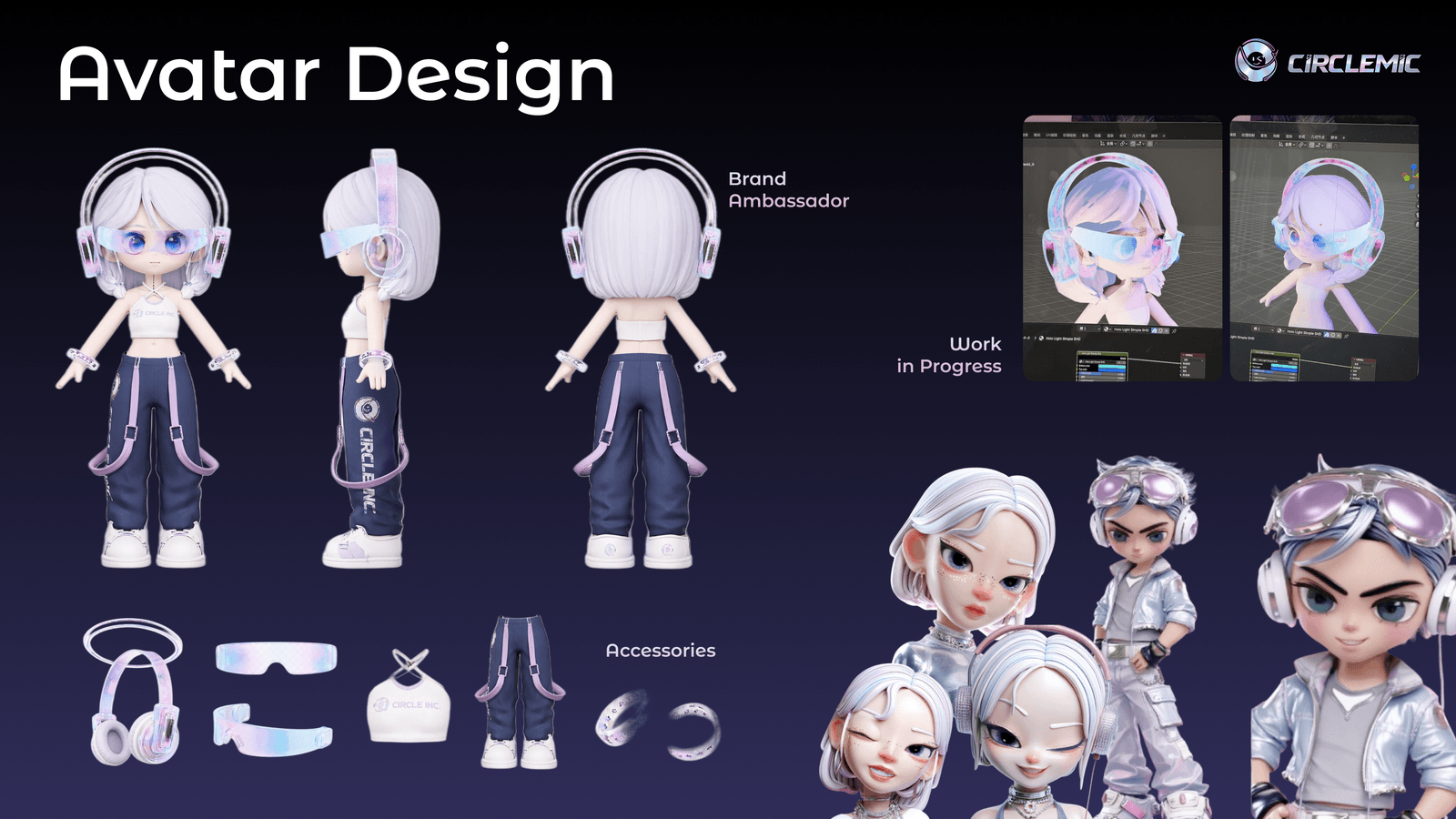
The companion is a VRM avatar with its own RVC voice model and its own behaviour prompt. It stands to the right of the teleprompter, sways with the music, and changes expression as the song runs. You assign it whichever parts you are not singing.
Where it is now
Internal demo. There is a working build, and what it can do today is duet with a cloned voice, hold harmony against it, and talk to it between songs.
I work on the VR side and own voice interaction, which is the part where the companion goes from a file playing back to something you are singing with.
The open question is not technical. It is whether the companion still feels like company on the tenth song rather than the first.